“Can I schedule a dental visit for my unborn child?”
“Uh, well, it’s a little hard without at least a name and birthday, but sure we can.”
Not the typical question we get in the dental office. But when an expecting mom who was 39 weeks pregnant asked this last week at our office, I thought, By golly, she has got it figured out.
Let me explain.
Cavities can come fast in the child of an unsuspecting parent. Only moms who’ve had the unfortunate experience of an older child’s mouth being ravaged by decay by age three would ask this kind of question. This mom was rescheduling her older child for a six-month check and knew it was only days until her next baby would be born. She wanted to schedule the baby for the same day as her older sibling.
With cavities being the most common chronic childhood disease, why shouldn’t new mothers have a 6-month dental checkup on the calendar, just like they do with the pediatrician for wellness checks?
But how early is too early?
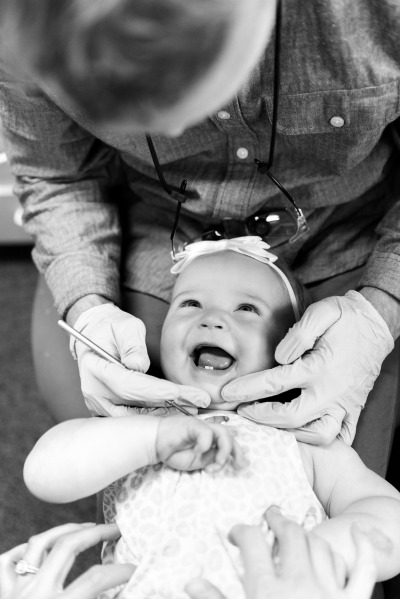
Dentists recommend a first dental visit be made when the first tooth comes in or by age one to establish a dental home, assess risk, and give education and guidance to parents on how to prevent this all too common disease.
Compare this eager expectant mom to a second mother who came in with her almost 7-year-old for his first dental visit. The child had an abscessed molar which was causing swelling in the cheek and around the eye.
She stated, “I thought it was too early to go to the dentist.”
Though the abscessed tooth was the most urgent, let’s just say it wasn’t the only one in need of attention.
It’s never too early to go to the dentist. If you’re not sure when you should start, call your local pediatric dentist and ask their advice about when you should bring your child in for a check-up.
They will be excited that you are an dedicated parent who wants to start early to protect your baby from ever getting cavities. They will get you scheduled for an appointment at the right time–as long as your baby is born and has a name, that is.
Tooth Training Challenge for This Week:
Call your dentist and get your child scheduled for their next check-up. If you’re not sure when that should be, just ask them!





Leave a Reply